Chiang Mai vs Da Nang for Digital Nomads in 2026: Which Is Better?
TL;DR: Chiang Mai and Da Nang are both excellent digital nomad bases in 2026, but they suit different priorities. Da Nang wins on cost (10-20% cheaper), beach access, and apartment value. Chiang Mai wins on visa flexibility (Thailand’s DTV is far stronger than Vietnam’s e-visa), coworking infrastructure, healthcare, and the sheer depth of its nomad community. Choose Da Nang if you want a beach lifestyle on a tighter budget. Choose Chiang Mai if you want a longer-stay visa, a massive nomad scene, and mountain access. Both deliver fast internet, great food, and a comfortable remote-work lifestyle for $1,200-2,000 per month.
I have spent multiple extended stays in both Chiang Mai and Da Nang over the past four years, and the question I get asked most often is some version of “which one should I pick?” The honest answer is that both cities belong on any serious nomad shortlist, and neither is objectively better. They are different.
This guide breaks down that difference across every category that actually matters for remote work and daily life. I will give specific numbers, honest trade-offs, and a clear verdict at the end for different nomad profiles.
Head-to-Head Comparison Table
Before the detail, here is the full side-by-side overview.
| Category | Chiang Mai | Da Nang | Edge |
|---|---|---|---|
| Monthly Cost (mid-range) | $1,300-2,000 | $1,200-1,800 | Da Nang |
| Rent (1BR apartment) | $400-700 | $350-650 | Da Nang |
| Meal Cost (local food) | $2-4 | $1.50-3 | Da Nang |
| Coworking (monthly) | $80-150 | $50-120 | Da Nang |
| Internet Speed | 50-100 Mbps | 50-80 Mbps (fiber to 200 Mbps) | Tie |
| Visa (best option) | DTV: 180 days, $280 | E-visa: 90 days, $25 | Chiang Mai |
| Long-Stay Visa | DTV: 5-year multi-entry | E-visa: 90-day single renewal cycle | Chiang Mai |
| Nomad Community Size | Large (10+ years established) | Medium (growing fast) | Chiang Mai |
| Coworking Spaces | 40+ spaces | 10-15 spaces | Chiang Mai |
| Beach Access | None (landlocked) | 30km coastline, walkable | Da Nang |
| Mountain/Nature Access | Excellent (Doi Suthep, trekking) | Limited (Ba Na Hills day trip) | Chiang Mai |
| Weather Reliability | Nov-Feb excellent, Mar-Apr terrible (smoke) | Feb-Aug excellent, Oct-Dec heavy rain | Tie |
| Healthcare | International standard, affordable | Good and improving, fewer English speakers | Chiang Mai |
| Food Quality | Excellent Thai + international | Exceptional Vietnamese + seafood | Tie |
| Nightlife | Moderate (Nimmanhaemin scene) | Quieter, beach bars and restaurants | Chiang Mai |
| Safety | Very safe, low crime | Very safe, low crime | Tie |
| Time Zone | GMT+7 | GMT+7 | Tie |
| Flight Connections | Good domestic, decent international | Growing regional, limited international | Chiang Mai |
Quick tally: Da Nang leads on 4 categories (cost, rent, food cost, beach). Chiang Mai leads on 6 categories (visa, community, coworking, nature, healthcare, flights). The remaining 8 are ties or subjective. But raw category counts do not tell the whole story. Let me break down each one.
Cost of Living: Da Nang Wins on Value
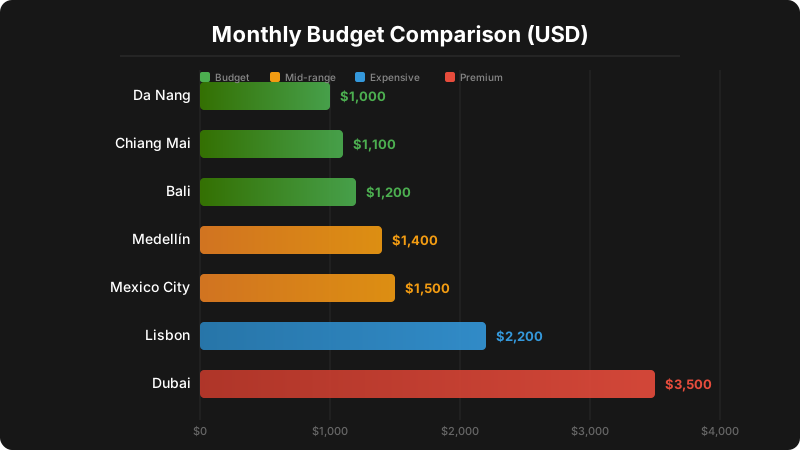
Da Nang is cheaper than Chiang Mai at every budget tier, though the gap is narrower than many people expect. Vietnam’s lower price floor is the main driver, especially for food and accommodation.
Monthly Budget Comparison
| Category | Chiang Mai (Budget) | Chiang Mai (Mid) | Chiang Mai (Comfortable) | Da Nang (Budget) | Da Nang (Mid) | Da Nang (Comfortable) |
|---|---|---|---|---|---|---|
| Rent | $300-500 | $500-700 | $800-1,200 | $250-400 | $400-650 | $650-1,000 |
| Food | $200-300 | $300-450 | $500-700 | $150-250 | $250-400 | $400-600 |
| Coworking | $0-80 | $80-150 | $150-250 | $0-50 | $50-120 | $120-180 |
| Transport | $40-70 | $70-120 | $120-200 | $30-50 | $50-80 | $80-150 |
| Phone/Internet | $15-25 | $20-35 | $30-50 | $5-10 | $10-15 | $15-25 |
| Entertainment | $50-100 | $120-200 | $250-400 | $40-80 | $80-150 | $150-300 |
| Health & Misc | $50-100 | $100-150 | $150-250 | $40-80 | $80-150 | $150-250 |
| Monthly Total | $655-1,175 | $1,190-1,805 | $2,000-3,050 | $515-920 | $920-1,565 | $1,565-2,505 |
A few things jump out from this table. Da Nang saves you the most on food. A bowl of pho from a street stall in Da Nang runs $1.50-2.00. A comparable pad Thai or khao soi in Chiang Mai costs $2.50-4.00. Over a month of eating mostly local food, that $1-2 difference per meal adds up to $60-120 in savings. Accommodation is the second biggest gap. A modern one-bedroom apartment with a pool in Da Nang’s An Thuong area costs $400-550. A similar apartment near Nimmanhaemin in Chiang Mai runs $500-700.
The gap narrows at the comfortable tier because both cities offer genuine luxury at prices that feel absurd compared to Western cities. At $2,500-3,000 per month, you are living very well in either place.
For Vietnam-specific cost data broken down by neighborhood and season, see our cost of living in Vietnam city-by-city breakdown.
Internet Speed and Reliability: A Practical Tie
Both cities deliver fast, reliable internet that supports video calls, large file uploads, and all standard remote work tasks. The differences are in the details.
Chiang Mai internet:
- Apartment connections: 50-100 Mbps typical, fiber available in newer buildings
- Coworking spaces: 50-150 Mbps with dedicated lines
- Major providers: AIS Fibre, True Online, 3BB
- Cafe wifi: 20-50 Mbps at popular nomad cafes
- Reliability: Very consistent; outages are rare
Da Nang internet:
- Apartment connections: 50-80 Mbps typical, fiber to 200 Mbps in newer buildings
- Coworking spaces: 50-100 Mbps with backup connections
- Major providers: Viettel, VNPT, FPT Telecom
- Cafe wifi: 20-50 Mbps at chains like The Coffee House and Highlands Coffee
- Reliability: Good; occasional submarine cable issues affect international routing
Vietnam has invested heavily in fiber infrastructure in recent years, and Da Nang benefits from that. New apartment buildings routinely offer 100-200 Mbps fiber connections for $8-15 per month, which is remarkably cheap. Chiang Mai’s internet was already solid and has stayed that way. Neither city will leave you struggling with Zoom calls.
The one edge Chiang Mai has is coworking internet infrastructure. With 40+ coworking spaces built over a decade of serving nomads, the average connection quality in Chiang Mai coworking spaces is slightly better. But this is a marginal difference, not a dealbreaker.
Visa Situation: Chiang Mai Wins Clearly
This is one of the biggest practical differences between the two cities, and it comes down to their respective countries’ visa policies.
Thailand’s Destination Thailand Visa (DTV)
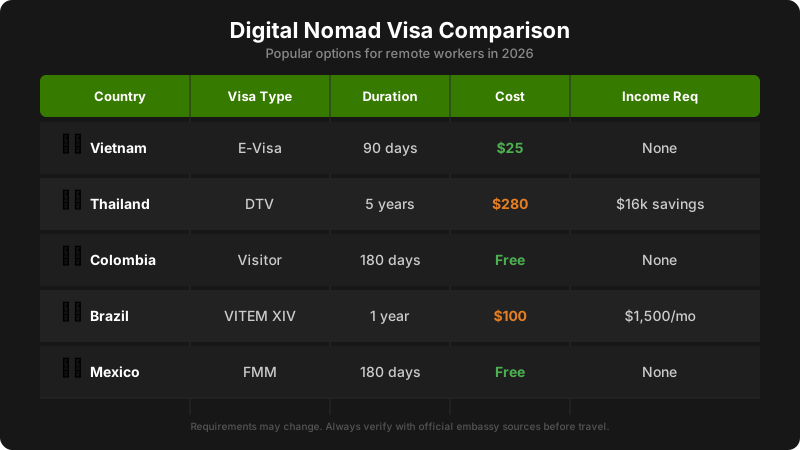
- Validity: 5 years, multiple entry
- Stay per entry: Up to 180 days
- Extension: One 180-day extension available per entry
- Cost: 10,000 THB (approximately $280)
- Requirements: Proof of remote work or freelance income, health insurance
- Best for: Long-stay nomads who want stability without border runs
The DTV changed the game for Thailand. Before its July 2024 launch, nomads in Thailand relied on tourist visa extensions and border runs every 60-90 days. Now you can stay up to 360 days per entry cycle with a single extension. Over 5 years with multiple entries, the DTV provides the kind of flexibility that most nomad visas in the region cannot match. For a deep dive, see our Thailand DTV guide for remote workers.
Vietnam’s E-Visa
- Validity: 90 days, single or multiple entry
- Stay per entry: Up to 90 days
- Extension: Possible through agencies, not guaranteed
- Cost: $25-50
- Requirements: Passport, photo, basic online form
- Best for: Short-to-medium stays with planned visa runs
Vietnam’s e-visa is cheap and easy to get, but it caps you at 90 days before you need to either extend (uncertain) or do a visa run to a neighboring country. Over a year, that means 3-4 visa runs at $150-300 each, adding $450-1,200 to your annual costs and requiring travel logistics every three months.
Vietnam does not yet have a dedicated digital nomad visa. The e-visa technically does not authorize employment, though enforcement on foreign remote workers earning from overseas clients is minimal. For full details on navigating this, see our Vietnam digital nomad visa guide.
The verdict: If you want to settle in for 6-12 months without visa stress, Thailand’s DTV makes Chiang Mai the easier choice. If you are staying under 90 days or do not mind periodic visa runs, Da Nang’s $25 e-visa is hard to beat on cost.
Weather and Climate: Both Have a Bad Season
Neither city offers perfect weather year-round. The question is which bad season bothers you more.
Chiang Mai’s Weather
- Best months (November-February): Cool and dry, 15-28C. This is Chiang Mai at its finest. The air is clear, the temperatures are comfortable, and outdoor activities are ideal. This is peak nomad season for good reason.
- Hot season (March-May): Temperatures hit 35-40C and the infamous burning season creates some of the worst air quality in the world. AQI readings of 200-400 are common in March and April. This is not an exaggeration. The sky turns hazy grey, the mountains disappear, and many nomads with respiratory sensitivity leave the city entirely during these months.
- Rainy season (June-October): Warm and wet, with afternoon downpours that usually clear within an hour or two. Temperature drops to 25-32C. The air is clean again, the landscape is green, and many experienced nomads consider this an underrated season.
The smoke season is Chiang Mai’s single biggest drawback. It is caused by agricultural burning in northern Thailand, Myanmar, and Laos, and it has gotten worse in recent years. If you have asthma, allergies, or simply value clean air, March and April in Chiang Mai are genuinely unpleasant. Many long-term nomads plan their travel to be elsewhere during these months, often heading to the Thai islands or across to Vietnam.
Da Nang’s Weather
- Best months (February-August): Warm to hot, 25-35C, with low rainfall and calm seas. The beach is swimmable, outdoor dining is comfortable, and the city feels alive. March through June is the sweet spot.
- Rainy season (September-December): Heavy rainfall, particularly in October and November. Da Nang receives the bulk of its annual precipitation in a concentrated period. Flooding happens in low-lying areas. Seas become rough and swimming is inadvisable.
- Cool months (December-February): Temperatures drop to 18-24C with occasional drizzle. Not cold by most standards but noticeably cooler than the rest of the year. Some apartments lack heating, so bring layers.
Da Nang’s rainy season is intense but shorter than Chiang Mai’s problematic months. Heavy rain limits outdoor activities, but it does not create the health hazard that Chiang Mai’s smoke season does. You can still work normally during Da Nang’s rainy season. During Chiang Mai’s smoke season, even indoor air quality suffers without a purifier.
The verdict: If forced to pick a bad season to endure, most nomads would choose Da Nang’s rain over Chiang Mai’s smoke. Rain is inconvenient. Hazardous air quality is a health concern.
Coworking and Cafe Scene: Chiang Mai Has More Options
Chiang Mai’s decade-long head start as a nomad hub shows most clearly in its coworking infrastructure.
Chiang Mai Coworking
Chiang Mai has over 40 coworking spaces, ranging from basic hot desks to premium offices. The concentration around Nimmanhaemin and the Old City means you are never far from a workspace.
Notable spaces:
- Punspace (Nimmanhaemin and Tha Phae Gate): The original Chiang Mai coworking space. Reliable, affordable, and a good default. Hot desk from 250 THB/day ($7), monthly from 3,500 THB ($100).
- CAMP at Maya Mall: Free coworking space by AIS in a mall food court. Surprisingly functional for casual work, though it gets crowded.
- Yellow Coworking: Modern space with strong community events. Monthly from 4,000 THB ($115).
- Heartspace: Quieter, focus-oriented space. Good for deep work sessions.
- Hub53: Co-living and coworking combo that suits new arrivals looking for instant community.
Da Nang Coworking
Da Nang’s coworking scene is smaller but growing. There are 10-15 dedicated spaces, with the best concentrated in the An Thuong and My Khe beach areas.
Notable spaces:
- Enouvo Space: The most popular nomad coworking in Da Nang. Clean, fast internet, great community vibe. Monthly from 1,500,000 VND ($60).
- Danang Coworking: Budget-friendly with a solid core of regulars. Day rate from 150,000 VND ($6).
- Hub Hoi An (30 min away): If you are splitting time between Da Nang and Hoi An, this is the best option in the ancient town.
Da Nang compensates for fewer coworking spaces with an exceptional cafe culture. Vietnamese coffee shops are built for working. The Coffee House, Highlands Coffee, and dozens of independent cafes offer reliable wifi (20-50 Mbps), air conditioning, and the expectation that you will sit for hours over a 25,000 VND ($1) ca phe sua da. In Chiang Mai, the cafe-as-office culture is also strong, but drinks cost $2-4, so the daily cost of cafe-working adds up faster.
For the complete rundown on coworking across Vietnam, see our guide to the best coworking spaces in Vietnam.
Community and Social Life: Chiang Mai Has Scale, Da Nang Has Warmth
Chiang Mai’s Nomad Community
Chiang Mai is the original Southeast Asian digital nomad hub. The community has been building since the early 2010s and has a depth that newer destinations cannot replicate overnight.
What this means in practice:
- Weekly meetups for almost every interest: coding, startups, freelancing, marketing, fitness, meditation, hiking, language exchange
- Established Facebook groups with thousands of active members answering questions and organizing events
- Networking events that attract founders, agency owners, and experienced remote professionals
- A social calendar that runs year-round, though it peaks during the cool season (November-February) when nomad population surges
The downside of Chiang Mai’s large community is that it can feel cliquish. Long-term residents form tight groups, and some newcomers report it takes a few weeks to break into social circles. The coworking spaces are the easiest entry point. Show up at Punspace or Yellow, attend a community event, and connections follow.
Da Nang’s Nomad Community
Da Nang’s community is smaller, estimated at 2,000-4,000 active nomads at any given time compared to Chiang Mai’s 5,000-10,000 during peak season. But smaller can be an advantage.
What Da Nang offers:
- A tighter-knit community where familiar faces appear quickly. Within your first week, you will recognize regulars at coworking spaces and cafes.
- Regular meetups organized through Facebook groups and coworking spaces, though with less variety than Chiang Mai
- A beach-centric social culture where surfing, beach volleyball, and sunset gatherings are natural meeting points
- Growing fast as nomads relocate from more expensive or disrupted bases. The wave of nomads leaving Dubai has boosted Da Nang’s international community noticeably in 2026.
If you are a first-time nomad who finds large scenes overwhelming, Da Nang’s smaller community may actually be the easier soft landing. If you thrive on variety and want access to a deep bench of professionals, Chiang Mai is hard to beat.
Food and Nightlife: Different Worlds, Both Excellent
Chiang Mai Food
Thai food in Chiang Mai is outstanding and the northern Thai specialties set it apart from Bangkok or the islands. Khao soi (curry noodle soup) is the signature dish and it costs $2-3 from a good street stall. Other staples include sai ua (northern Thai sausage), laab (spiced meat salad), and som tam (papaya salad).
Beyond Thai food, Chiang Mai has a strong international food scene built by years of expat demand. Japanese, Indian, Mediterranean, and Western restaurants cluster around Nimmanhaemin. Vegan and vegetarian options are abundant thanks to the wellness-oriented community.
A meal at a local restaurant costs $2-4. A Western restaurant meal runs $6-12. Groceries at Rimping or Tops Market are reasonable, with imported items costing more.
Nightlife: Nimmanhaemin has the most concentrated bar and restaurant scene. Live music venues, craft beer spots, and rooftop bars cater to both nomads and locals. The Night Bazaar and Sunday Walking Street markets are weekly social institutions. Chiang Mai is not Bangkok for nightlife, but there is plenty to do after dark.
Da Nang Food
Vietnamese cuisine in Da Nang is exceptional and arguably the best value food in all of Southeast Asia. The city sits in the center of Vietnam’s culinary map, blending central Vietnamese specialties with influences from both north and south.
Standout dishes include mi quang (turmeric noodles), banh xeo (sizzling crepe), bun cha ca (fish cake noodle soup), and the freshest seafood you will eat anywhere at $3-6 for a full plate. A bowl of pho costs $1.50-2. A banh mi from a street cart costs $0.75-1.50.
Da Nang also has a growing international food scene, particularly in the An Thuong area, where Korean, Japanese, and Western restaurants have multiplied alongside the growing nomad population.
Nightlife: Da Nang is quieter than Chiang Mai after dark. The scene centers on beach bars, rooftop restaurants along the Han River, and a handful of late-night spots in An Thuong. If you want a vibrant nightlife scene, Chiang Mai has more to offer. If your idea of a good evening is seafood on the beach with a cold beer, Da Nang delivers perfectly.
For 200+ pages of neighborhood guides, food recommendations, and local intel, get The Digital Nomad Guide: Vietnam.
Healthcare: Chiang Mai Has the Edge
Healthcare quality matters more than most nomads realize until they need it.
Chiang Mai healthcare:
- Multiple international-standard private hospitals, including Chiang Mai RAM Hospital and Lanna Hospital
- English-speaking staff at major facilities
- A general practitioner visit costs $15-40 at a private clinic
- Dental cleaning runs $25-50
- Bangkok’s world-class hospitals (Bumrungrad, BNH) are a 1-hour flight away for specialist needs
- Medical tourism infrastructure means high quality at very affordable prices
Da Nang healthcare:
- Da Nang Hospital and several private clinics handle routine medical needs
- English-speaking staff is less common than in Chiang Mai, though improving
- A general practitioner visit costs $10-30
- Dental care is affordable ($15-40 for a cleaning) but specialist options are more limited
- Ho Chi Minh City (1.5-hour flight) is the nearest city with full international-standard hospitals
- Medical infrastructure is improving rapidly but is not yet at the level of Chiang Mai’s established system
Insurance: International policies from providers like SafetyWing ($45-85/month) cover both countries. For routine care, you can often pay out of pocket in either city and spend less than your insurance deductible.
The verdict: Chiang Mai wins on healthcare infrastructure and English-language accessibility. Da Nang is fine for routine needs but falls short for anything serious. Neither city should cause anxiety for a healthy nomad with insurance, but Chiang Mai offers more peace of mind.
Beach vs Mountains: The Lifestyle Divide
This is where the comparison becomes less about metrics and more about what kind of life you want.
Da Nang: Beach Life
Da Nang’s 30-kilometer coastline is the single biggest lifestyle advantage it holds over Chiang Mai. My Khe Beach has been consistently ranked among the best urban beaches in Asia, and it is a 5-10 minute walk or ride from most nomad apartments.
What beach access gives you:
- Morning swims or surf sessions before work
- Sunset runs along the beachfront
- Weekend beach days without any commute
- A natural social scene around beach bars and surf spots
- The psychological benefit of living near the ocean, which is more significant than it sounds after months of laptop work
Chiang Mai: Mountain Life
Chiang Mai sits at roughly 300 meters elevation in a valley surrounded by mountains, with Doi Suthep rising to 1,676 meters directly west of the city. This geography delivers a completely different set of lifestyle perks.
What mountain access gives you:
- Cooler temperatures than coastal cities, especially November through February
- Hiking and trail running on Doi Suthep and surrounding national parks
- Weekend trips to Pai, Chiang Rai, and the Golden Triangle
- A lush, green setting during the rainy season
- Less humidity than coastal Vietnam
Neither is better. They are fundamentally different lifestyle propositions. If you have spent your nomad career in beach towns and want a change, Chiang Mai’s mountain setting is refreshing. If you have been in landlocked cities and crave the coast, Da Nang will feel like a reward.
Time Zone: Identical
Both cities operate on GMT+7 (Indochina Time), so there is zero timezone difference between them. This makes the comparison straightforward:
- US East Coast: 12 hours ahead (your 9pm = their 9am)
- US West Coast: 14 hours ahead
- UK/London: 7 hours ahead (6 during BST)
- Central Europe: 6 hours ahead (5 during CEST)
- Australia (Sydney): 3 hours behind (4 during AEDT)
If you work with US clients, both cities require a shifted schedule or early morning/late night calls. If you work with European or Asia-Pacific clients, the overlap is more manageable. For a broader look at how SEA timezones compare to Latin America for US-facing work, see our Southeast Asia vs Latin America comparison. If the timezone offset is a dealbreaker, Brazil’s northeast coast offers a beach lifestyle similar to Da Nang but with full US business-hour overlap.
Flight Connectivity: Chiang Mai Has More Options
Chiang Mai International Airport (CNX) handles direct flights to Bangkok (hourly, 1.5 hours), Singapore, Kuala Lumpur, Seoul, Hong Kong, and several Chinese cities. Bangkok connections open up the full Star Alliance and oneworld hub networks. Low-cost carriers AirAsia and Thai VietJet keep domestic and regional flights affordable, with Bangkok fares often under $30 one-way.
Da Nang International Airport (DAD) has grown significantly but still lags behind CNX on international routes. Direct flights serve Singapore, Seoul, Tokyo, Bangkok, Kuala Lumpur, and several Chinese cities. Ho Chi Minh City and Hanoi are both served by frequent domestic flights (1-1.5 hours, $30-60). VietJet and Bamboo Airways offer budget domestic options.
For European connections, both cities currently require routing through a regional hub. The Middle East airspace disruptions mean flights from Europe add cost and time through whichever hub you choose.
The verdict: Chiang Mai has the edge, largely because Bangkok is a larger international hub than Ho Chi Minh City and the connection is more frequent. But for day-to-day nomad life, both airports serve regional travel needs well.
Who Should Choose Chiang Mai
Chiang Mai is the better choice if:
- You want a long-stay visa without border runs. The DTV gives you up to 360 days per entry cycle.
- You value a large, established nomad community with diverse meetups and networking.
- Mountain access and cooler weather matter to you.
- You prioritize healthcare infrastructure and English-language medical care.
- You prefer a more developed coworking scene with many options.
- You plan to be in SEA during November through February (Chiang Mai’s peak season is spectacular).
- You can leave during March-April to avoid the smoke season.
Chiang Mai is not the right choice if:
- You want beach access as part of your daily routine.
- You cannot leave during the burning season and are sensitive to air quality.
- Your budget is very tight and every $100-200 per month matters.
- You prefer a smaller, more intimate community.
Who Should Choose Da Nang
Da Nang is the better choice if:
- Beach access is non-negotiable for your lifestyle.
- You want the lowest possible cost of living in a modern, infrastructure-rich city.
- You prefer a tighter-knit community where you know familiar faces quickly.
- You are comfortable with 90-day visa cycles and periodic visa runs.
- Vietnamese food is a priority (Da Nang’s food scene is world-class and extraordinarily cheap).
- You plan to be in SEA during February through August (Da Nang’s best weather window).
- You want to explore the rest of Vietnam easily from a central base.
Da Nang is not the right choice if:
- You want a long-term visa with minimal admin.
- You need extensive coworking options and a large nomad event calendar.
- Mountain access and trekking are important parts of your lifestyle.
- You need reliable English-language healthcare for ongoing medical needs.
The Third Option: Do Both
Here is a strategy that experienced SEA nomads have figured out: do not pick one. The cities are in the same timezone, a direct flight apart (2.5 hours), and cheap enough that moving between them is practical.
A popular pattern:
- November-February: Chiang Mai (best weather, peak community, cool temperatures)
- March-April: Da Nang or elsewhere (escape Chiang Mai’s smoke season)
- May-August: Da Nang (best beach weather, warm and dry)
- September-October: Chiang Mai (rainy but pleasant, clean air, lower rents)
This rotational approach lets you enjoy the best of both cities and avoid the worst of each. Flights between them run $50-100 on budget carriers. If you travel light, you can move between bases with a carry-on.
The Bottom Line
Chiang Mai and Da Nang are not competitors. They are complements. Both deliver the core requirements of digital nomad life: fast internet, affordable rent, great food, welcoming communities, and a quality of life that makes remote work feel less like a compromise and more like an upgrade.
If you are picking one and only one for your next 3-6 months, the decision comes down to three factors: Do you want a beach or a mountain? Do you want a 180-day visa or a 90-day visa? And do you want a large community or a small one?
There are no wrong answers. Both cities will take care of you.
Planning your move to Da Nang or elsewhere in Vietnam? The Digital Nomad Guide: Vietnam covers everything from neighborhoods and coworking reviews to visa walkthroughs and 200+ pages of local intel.
Joe Atlas is the author of The Digital Nomad Guide: Vietnam and has been working remotely from Southeast Asia since 2021. He writes at digital-nomad-guides.com.